SMM Hub Research
Understanding learning experiences across SMM’s physical learning hubs
UX Research · Education

01 — Project Overview
Sekolah Murid Merdeka (SMM) is a blended-learning school within the Sekolah.mu education ecosystem. Alongside online learning, students can take part in face-to-face learning activities at physical hubs across Indonesia.
This research looked at the quality of learning and facilities across these hubs, including how parents and students chose and experienced them, how teachers experienced the facilities, and what needs were still not being met.
I worked as the main researcher in a team of three researchers, with supervision from a senior researcher. We worked together on the preparation, data collection, and analysis. My role covered most stages of the research, from preparing the study and conducting the research to analysing the data and writing the final report.
My Role
I worked on the research from study preparation through data collection and analysis. The study combined surveys, interviews, card sorting, and focus group discussions.
Some details from the original report are not included here because they relate to internal operations.
Project Information | |
|---|---|
Duration | September - October 2023 |
Institution | University of Twente |
Course | CMM |
Role | Researcher |
Research Context | Sekolah Murid Merdeka (SMM) |
Participants | Parents · students · teachers · supervisors · hub co-founders |
Methods | Survey · Semi-structured Interviews · Card Sorting · Focus Group Discussions |
02 — Research Context
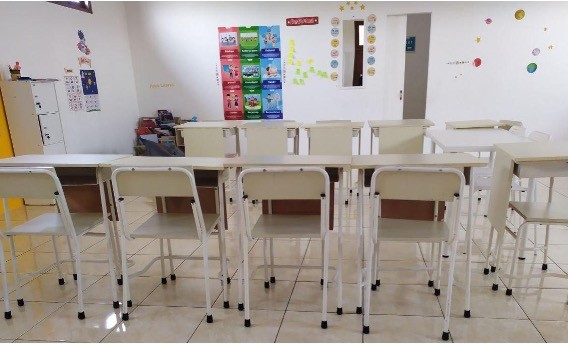
SMM operates physical hubs in different locations, and the study was concerned with the quality of learning and facilities across these hubs.
Facilities were one part of the research, but the study also considered how the hubs were experienced by different people. Parents and students could have different expectations of a hub, while teachers experienced the same environment through their work and learning activities.
Because of this, the research covered both the physical facilities and the wider learning experience, including hub choice, learning activities, services, and unmet needs.
03 — What We Needed to Understand
The study was organised around five questions:
01 — Choice
What influences parents and students when choosing a hub?
02 — Learning
How do parents and students experience learning at the hubs?
03 — Environment & Service
How do they experience the facilities and services around that learning?
04 — Staff Perspective
How do teachers experience the facilities they work with?
05 — Unmet Needs
What needs and expectations are still not being met?
04 — Research Methods
We used four methods in the study: a survey, semi-structured interviews, card sorting, and focus group discussions.
We started with a survey of parents and students to collect a broader set of responses about their experiences with the hubs. The questionnaire was reviewed and pilot-tested before it was distributed.
We then interviewed a smaller group of parents and students. Some had experience with one hub, while others had experience with more than one, which allowed us to discuss their experiences in more detail.
Card sorting was included as part of the interviews. Participants were asked to categorise different hub facilities as mandatory or optional and explain their choices. They could also mention facilities that were not already included in the cards.
Finally, we conducted focus group discussions with teachers, supervisors, and hub co-founders to include the perspective of people involved in teaching and operating the hubs.
Survey | Interviews | Card sorting | Focus groups |
|---|---|---|---|
361 responses | 8 participants | 8 participants | 5 sessions |
329 parents + 32 students | Parents + students | During interviews | Teachers + supervisors + co-founders |
05 — Survey
We initially planned to collect responses from 50 parents and 30 students. By the end of data collection, we received 361 responses: 329 from parents and 32 from students. The survey covered hub choice, learning activities, facilities, services, and participants’ overall experience with the hubs.
Planned | Collected | |
|---|---|---|
Parents | 50 | 329 |
Students | 30 | 32 |
Total | 80 | 361 |
The larger response from parents gave us more data than expected, but it also created an imbalance between the two respondent groups. Because of this, we analysed the parent and student responses separately and not treating them as one sample.
The responses suggested that hub choice was influenced by more than the facilities available. For students, for example, proximity was the most frequently selected factor, followed by teaching quality, accessibility, service quality, and facility completeness.
Responses about the physical environment also varied across facilities. Parents’ open-ended responses raised recurring needs around waiting areas, toilets, libraries, and outdoor activity spaces, alongside comments about communication and teaching.

06 — Interviews
After the survey, we conducted semi-structured interviews with eight participants: four parents and four students.
We included participants with different levels of experience with the hubs. Four had experience with one hub, while the other four had experience with multiple hubs. This allowed us to hear both about experiences within a particular hub and about differences participants had noticed across locations.
One hub | Multiple hubs | |
|---|---|---|
Parents | 2 | 2 |
Students | 2 | 2 |
Total | 4 | 4 |
The interviews examined participants’ experiences with learning, facilities, and services in more detail. Their responses showed that the presence of a facility alone did not fully describe their experience of it. For example, discussions about classrooms included space, seating, equipment, and comfort, while toilets were also discussed in relation to cleanliness and accessibility.
07 — Card Sorting
As part of the interviews, participants completed a card-sorting activity to classify hub facilities as mandatory or optional and explain their choices. The cards included classrooms, learning equipment, libraries, play areas, parent waiting areas, toilets, parking, prayer rooms, and health rooms. Participants could also add facilities that were not included in the initial set.
Some priorities were shared across participants, particularly classrooms and toilets, while others varied depending on how participants expected to use the hub. Libraries and play areas, for example, were valued differently depending on the activities and needs participants associated with them. The explanations behind the classifications were therefore as relevant to the analysis as the categories themselves.

08 — Focus Group Discussions
We conducted five focus group discussions with teachers, supervisors, and hub co-founders. The discussions examined the facilities from the perspective of staff involved in teaching, supervising, and operating the hubs.
Compared with parents and students, staff raised more practical considerations about how facilities functioned in daily use. These included the availability of learning materials, space, infrastructure, and maintenance, as well as differences in how facilities could support learning activities across hubs. Detailed operational issues and location-specific findings are omitted from this case study.

09 — Findings and Recommendations
We compared the results from the survey, interviews, card sorting, and focus group discussions. Across the methods, several recurring needs concerned the learning environment, supporting facilities, and services, although their importance differed between stakeholder groups.
For example, parents and students often discussed facilities in relation to how they would use them, while staff also considered what was needed to support learning activities and day-to-day operations. This meant that the same facility could be important for different reasons depending on the stakeholder.
The findings were used to develop recommendations for facilities, services, and consistency across hubs. Detailed recommendations, operational findings, and comparisons between individual hubs are not included in this public case study because they contain internal information.
10 — Reflection
The survey received substantially more responses than planned, particularly from parents. While this gave us more data to work with, the difference between 329 parent and 32 student responses also made the sample uneven. A larger sample was not necessarily a more balanced one. If I repeated the study, I would plan recruitment separately for each participant group.
Working with students also required more attention to how questions were phrased and explained. Some participants were younger, and conducting parts of the research remotely made it more difficult to maintain attention and check whether questions were understood as intended. I would prepare and test materials separately for different age groups in a future study.
Using several methods was useful, but it also made the analysis more complex. The survey, interviews, card sorting, and focus groups did not always produce the same priorities. Parents, students, and staff approached the hubs from different positions, so differences between their responses were part of the findings rather than something that needed to be resolved.
The card-sorting activity was particularly useful in this respect. Categorising a facility as mandatory or optional was only a starting point; participants’ explanations often contained more useful information about how they expected a space to function and under what conditions it was useful. This made me more attentive to the reasoning behind a response rather than relying only on the category or rating itself.
Finally, I would plan the analysis earlier if I conducted a similar study again. With several participant groups and four methods, defining in advance how the different sources would be compared would make the synthesis more systematic and easier to trace back to the research questions.